
6 Proven Ways to Turn Motivation Into Action
This article explains why goals usually fail and how to make them work by starting immediately, choosing the right type of goals, changing habits with tiny steps, using your environment, and working with your brain instead of fighting it
2/9/20262 min read
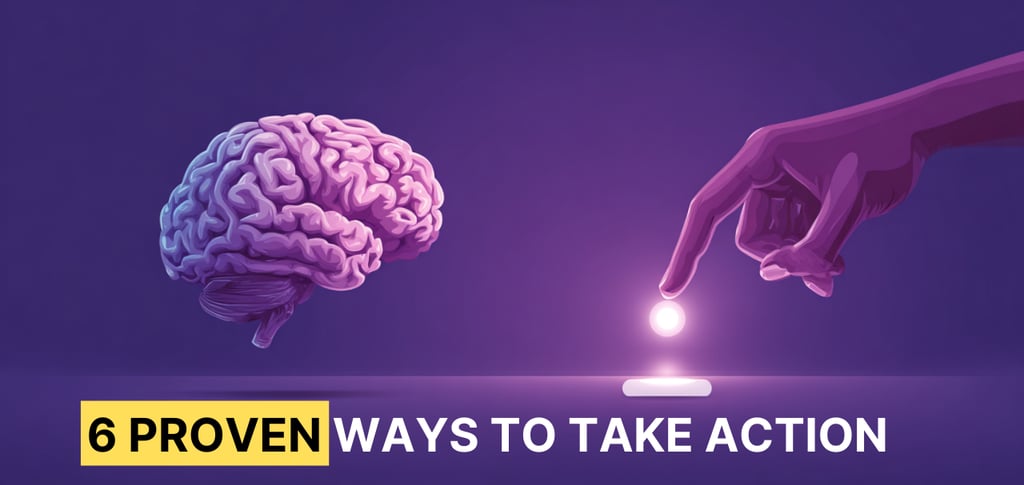
Rule 1: Don’t wait for “Monday”
Many people say: “I’ll start on Monday,” “Next month,” or “New Year.”
But by then, motivation usually fades.
Solution: If you decide to start, start today or tomorrow.
Example:
You want to exercise? Don’t wait for Monday. Do a 10-minute walk today.
You want to eat better? Start with one healthy meal tomorrow, not “next month.”
Rule 2: Choose goals you can move toward (not just avoid)
There are two types of goals:
Positive goals: moving toward something you want
Negative goals: trying to avoid something you don’t want
Positive goals usually work better because they create progress and dopamine.
Example (positive): “Go to the gym 2 times a week.”
You can plan it, schedule it, and do it.
Example (negative): “Stop eating sweets.”
This is harder because sugar is everywhere - delivery apps, snacks at work, birthdays, stress eating.
Better version:
Instead of “Stop sweets,” try:
“Eat fruit after lunch” or “Have dessert only on weekends.”
Rule 3: The real goal is changing habits (so start tiny)
Most goals fail because they require a habit change.
Habits are autopilot. To change them, you must fight autopilot again and again—and that’s exhausting.
Solution: Start very small and reward yourself after.
Example:
If your goal is reading: don’t say “30 minutes a day.”
Start with 1 page before bed.
If your goal is the gym: don’t start with 5 workouts a week.
Start with 1 workout or even “pack gym clothes and show up.”
Reward example:
After you do the habit, give yourself a small reward:
a nice coffee, 10 minutes of a favorite show, checking it off a tracker.
The brain learns: “This action is good. Repeat it.”
Rule 4: Your environment will shape your behavior
Humans are social. Your surroundings are stronger than willpower.
If you spend time with people who constantly drink, snack, or complain, you will slowly copy that pattern. Not because you’re weak - because you’re human.
Solution: Spend more time around people with the same goals.
Example:
Want to be healthier? Join a class, find a walking buddy, follow a fitness community, or spend time with friends who enjoy active weekends.
Want to grow professionally? Spend time with people who learn, build, and improve - not only gossip and scroll.
Rule 5: Plan your goals (vague goals don’t work)
Your brain doesn’t follow abstract goals like:
“I want to be better.”
“I want more money.”
“I want to be healthy.”
Solution: Make goals specific and planned.
Use a simple system:
What exactly?
When?
How often?
Where?
Example:
Not: “I’ll work out more.”
Better: “Mon + Thu at 7pm, 45 minutes, gym near home.”
Also, a practical rule:
Whatever time you think it will take - double it.
Life always interrupts.
And don’t skip the most important part: your WHY.
If your WHY is weak, you will quit.
Use the 5 Whys:
Ask “Why do I want this?” five times until you reach the real reason.
Example: “I want to lose weight.” Why?
“To feel confident.” Why?
“To stop hiding in photos.” Why?
“To feel free and attractive.”
That deep reason is what keeps you going.
Rule 6: Assume your brain will resist (so make the first step easy)
The brain is built to save energy. That’s biology.
So don’t rely on motivation. Build a first step so easy you almost can’t refuse.
Solution: Make the first step tiny, then increase slowly.
Example:
Want to start exercising?
First step: put on sports clothes and walk 5 minutes.
Want to start saving money?
First step: save $1 a day or set an automatic transfer of a small amount.
Tiny steps remove resistance. Consistency builds identity. Identity builds results.